A coast for all seasons
Izu’s greatest practical gift to travellers is its mild maritime climate. Warmed by the sea and sheltered by its mountains, the peninsula avoids the harsh extremes of much of Japan — which means there is genuinely no wrong time to visit, only a different reason to come. Here is what each season offers.
Spring: Japan’s early blossoms
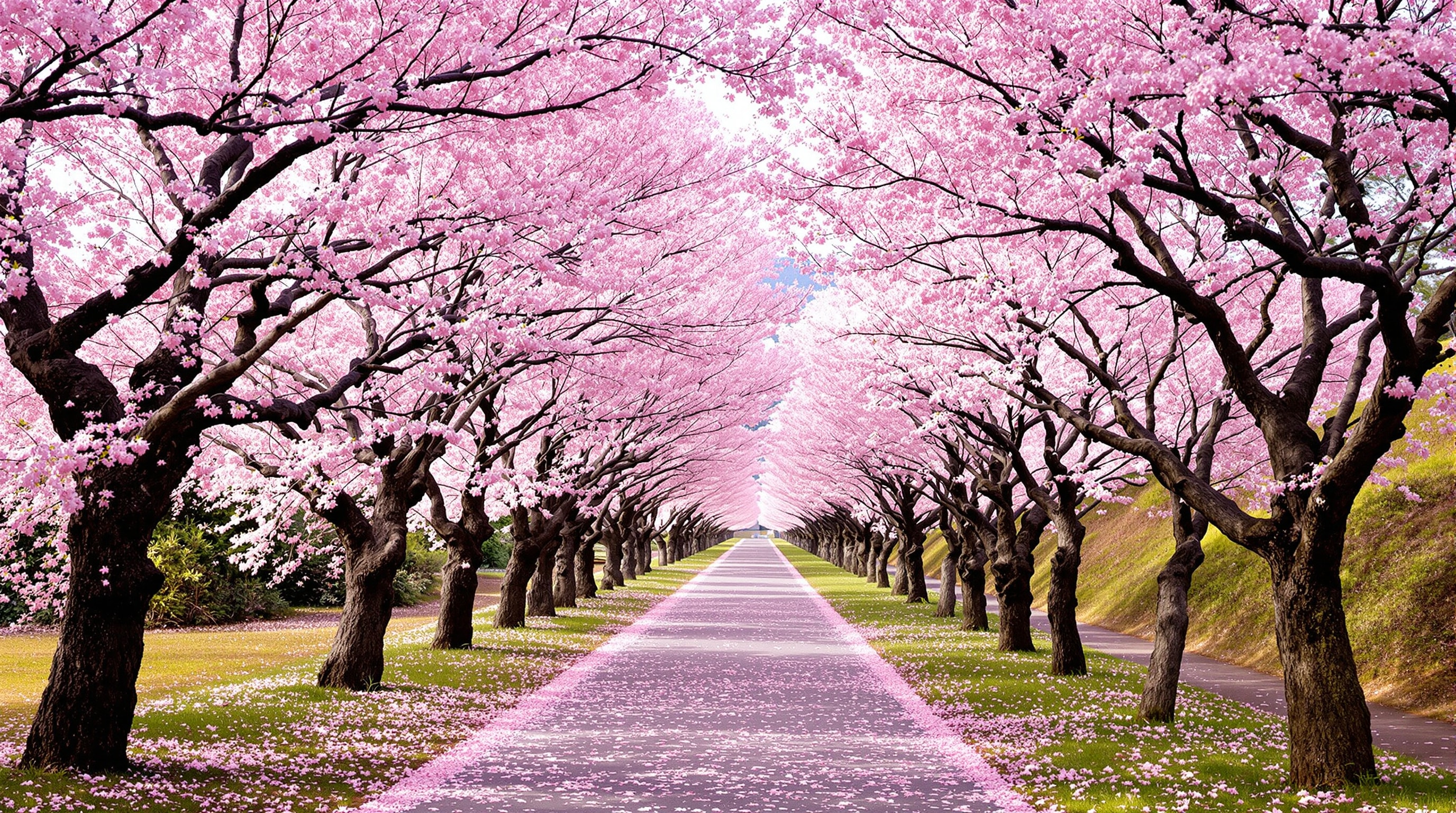
Izu is famous for blooming early. Its warmth coaxes some of the country’s first cherry blossoms open, and in the highlands the flowering avenues draw visitors while much of Japan is still waiting for spring; the general phenomenon is described in the overview of the cherry-blossom season. Spring is also when the azaleas ignite the slopes of Komuroyama, making the season a double bill of flowers by the sea. Days are mild, the baths still feel earned in the cool evenings, and the crowds are gentler than at the famous mainland viewing spots.
Summer: the swimming coast
In summer eastern Izu becomes a swimming coast. Its clear-water coves and pale-sand beaches fill with families, snorkellers explore the rocky shallows, and sightseeing boats work the headlands; dolphins are sometimes spotted offshore. Our beaches and coast page covers the marine side in detail. Evenings bring festivals and, along parts of the coast, fireworks over the water — and a hot bath still feels good once the sun is down and the sea breeze cools.
Autumn: mandarins and mild light
Autumn may be Izu’s quiet masterpiece. The fierce summer heat fades to warm, clear days; the spiny-lobster season opens on the seafood table; and the hillsides begin to glow with ripening mikan mandarins, which you can often pick straight from the terraced orchards overlooking the sea. That harvest, and the region’s other produce, is the subject of our local produce guide. Cosmos replace the azaleas on Komuroyama, and the softer light suits long coastal walks.
Winter: baths, crab, and clear horizons
Winter is when an onsen coast truly justifies itself. Snow is rare on the shore, so the region stays accessible while the cold sharpens the pleasure of a hot bath — nowhere more than in an open-air rotenburo, where steam meets frosty sea air. The season also brings crab to the table and, many say, the fattest and sweetest kinmedai. Clear winter air often delivers the year’s longest views from the hilltops, and around the New Year the towns take on the quiet ceremony of Japan’s most important holiday.
The rainy season, honestly
An all-seasons coast still has its awkward weeks, and it is only fair to name them. The tsuyu rainy front usually settles over central Japan from around early June to mid-July, bringing humid, grey stretches and the occasional day of serious rain; late summer and early autumn can also carry a typhoon or two up the Pacific side, which for a day or so means closed boats and a heavy sea. Neither is a reason to stay away. Rain suits Izu unusually well — hydrangeas along the lanes, mist caught in the headland pines, and an indoor bath with the weather hammering on the roof outside — but it is worth building a flexible day or two into a trip taken in June, and checking the forecast before you commit to a boat or a hilltop view.
Festivals through the year
The calendar of Izu is punctuated by festivals that follow the same seasons as its flowers and food. Spring brings blossom-viewing gatherings; summer, the coast’s beloved fireworks over the water and the lantern-lit evenings of the bon season; autumn, harvest and shrine festivals in the hill villages; and the New Year, the quiet, ceremonious holiday that is Japan’s most important, when inns serve special dishes and the first shrine visit sets the tone for the year. Dates shift and local customs vary from town to town, so it is worth checking what is on when you plan — but arriving during a festival adds a welcome layer of colour and community to any Izu trip.
So when should you go?
If you want flowers and mild days, come in spring; for the sea, come in summer; for food, light, and fewer crowds, autumn is hard to beat; and for the definitive hot-bath experience, choose winter. Whatever you pick, pair it with our getting to Izu page to sort the practicalities, and let the season shape the trip rather than the other way around.