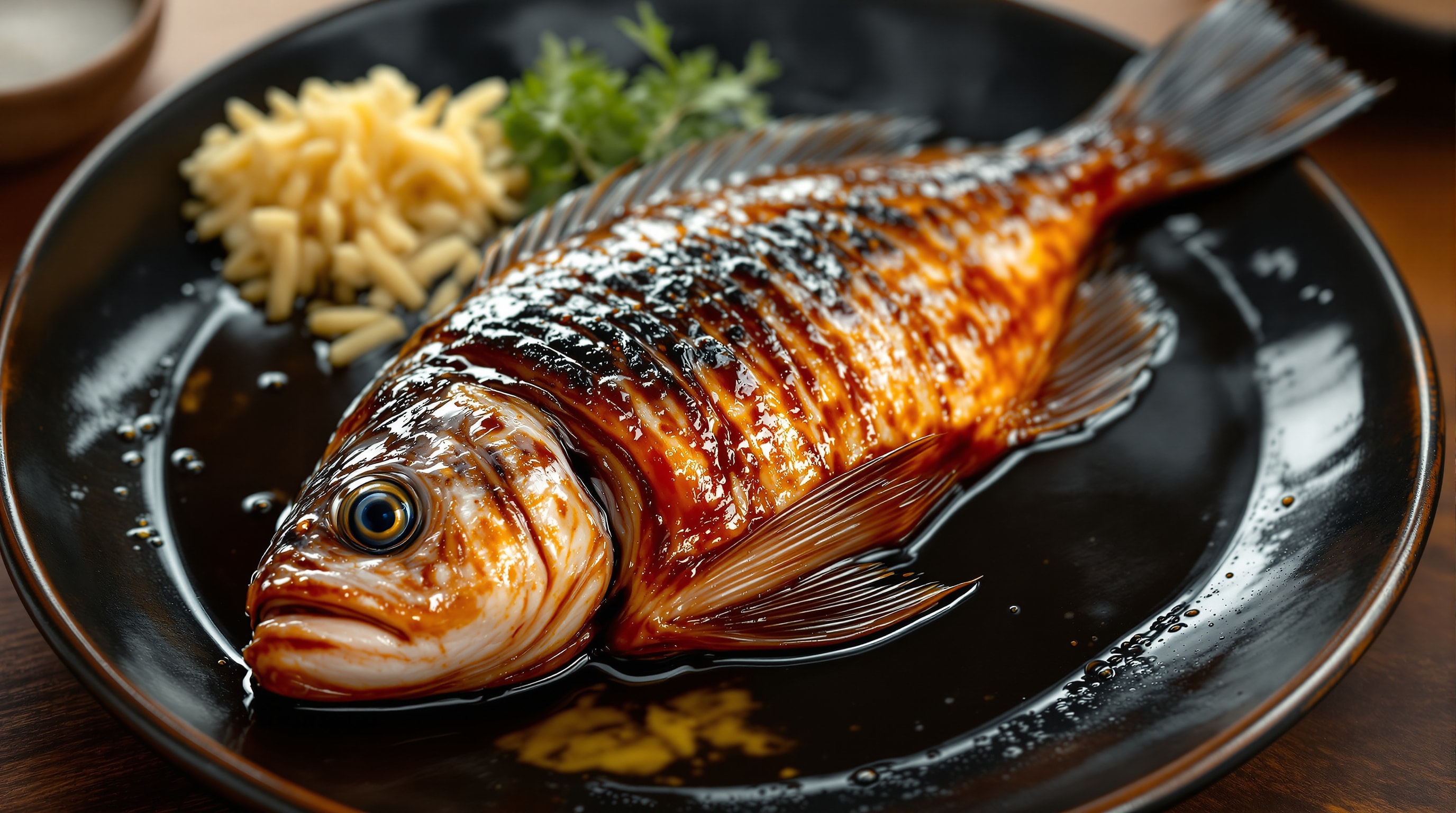
The fish with the golden eye
If Izu had to name a single dish, it would be kinmedai — the splendid alfonsino, a deep-water fish with rose-red skin and the large, luminous golden eye that gives it its name. It lives in the cold, dark water hundreds of metres down, and off eastern Izu the sea floor plunges so steeply that these depths lie unusually close to shore. That geography is the whole secret: boats can reach the grounds and return with the catch quickly, so the fish arrives at the kitchen in remarkable condition. The species itself is described in the entry on the splendid alfonsino.
Nitsuke: the classic braise
Kinmedai can be eaten as sashimi or grilled, but the definitive Izu preparation is nitsuke — simmering the fish, usually a whole one or a generous fillet, in a glossy broth of soy sauce, sake, mirin, sugar, and ginger. The result is a study in contrast: skin lacquered dark and sweet, flesh beneath it white, soft, and faintly fatty from the cold deep water. Cooked well, the meat flakes away from the bone in fluffy petals and carries just enough of the sweet-savoury glaze. It is comfort food raised to an art, and it is what most travellers picture when they think of an Izu dinner.
The dish rewards restraint. A good kitchen simmers the fish briefly and precisely so the flesh stays tender rather than tightening, and serves it while the glaze is still glossy. Grated ginger cuts the richness; a bowl of plain rice completes it. Nothing about it is fussy, which is exactly why it is so beloved.
Why local sourcing is a point of pride
Not every kinmedai on a menu comes from Izu waters, and cooks here make a point of the difference. Fish landed at the peninsula’s own ports — caught in nearby deep water and brought in the same day — are prized above kinmedai shipped from elsewhere, and above the cheaper red rockfish sometimes substituted for it. When a menu specifies a local landing, it is signalling both freshness and a connection to the boats working just offshore. For a traveller, ordering the local catch is the surest way to taste why Izu built a reputation on this one fish.
Where kinmedai fits in the Izu meal
A braised kinmedai rarely arrives alone. In the multi-dish tradition of Izu’s coastal kitchens it anchors a spread that might include sashimi of the day, a simmered vegetable, a small grill, and miso soup, each course sized to leave room for the next. That wider table — including the region’s famous spiny lobster and crab — is the subject of our Izu seafood guide. The dining format itself, and the hospitality that frames it, is explored on the ryokan tradition page.
Beyond the braise
While nitsuke is the classic, kinmedai is versatile enough to appear across a whole meal. Its clean, faintly sweet flesh makes fine sashimi when very fresh; a quick sear leaves the skin crisp and the centre silky; and in the hot-pot tradition, thin slices swished briefly in simmering broth — kinmedai shabu-shabu — are a winter favourite. Some kitchens even lay the fish over rice to make a donburi that soaks up the sweet juices. Trying it braised is essential, but if you spend more than an evening in Izu, it is worth meeting the golden-eye snapper in more than one guise.
Tasting it at its best
Kinmedai is available year-round, but many say the winter fish, carrying more fat against the cold, is the sweetest. Whenever you try it, look for the words that signal a local catch, order it simmered at least once, and eat it slowly. It is not an expensive-feeling luxury so much as a regional staple done exceptionally well — the taste of a coast where the deep sea comes almost to the doorstep.