Relax — the rules are kinder than they look
Newcomers often approach a Japanese bath nervously, worried about breaking some hidden rule. In truth, onsen etiquette exists for one friendly reason: to keep the shared water clean and the atmosphere calm for everyone. Once you understand that, every custom makes sense and the whole thing becomes second nature. Here is the sequence, start to finish.
Before you get in
Undress fully in the changing room — swimwear is not worn in a traditional onsen — and leave your clothes in a basket or locker. You will carry only a small towel into the bathing area. Long hair should be tied up so it does not touch the water. If you wear glasses, they are fine; a bath is one place a phone or camera is not, both for your privacy and everyone else’s.
Wash first, always
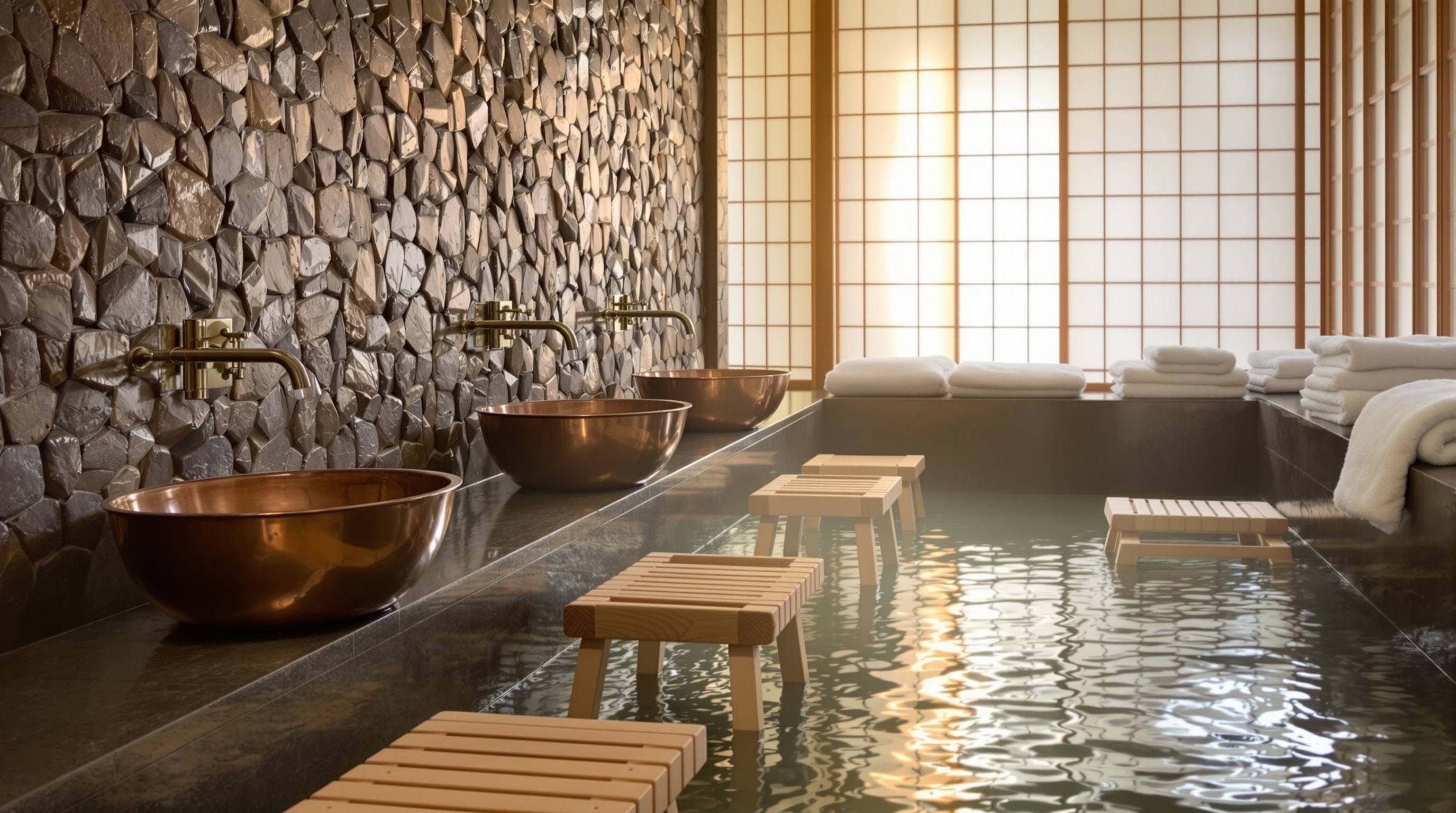
This is the one rule that matters most. Before entering the shared bath, sit at one of the washing stations — a low stool, a hand-shower, and a basin — and clean yourself thoroughly, rinsing away all soap. The communal water is for soaking in a body that is already clean, never for washing. Take your time; the washing ritual is part of the pleasure, not a chore to rush before the “real” bath.
In the water
Enter slowly — onsen water is genuinely hot, often around forty degrees or more — and lower yourself in gently. Keep your small towel out of the water; most bathers fold it and rest it on their head or on the stone at the edge. Speak quietly if at all. There is no need to swim, splash, or perform; the point is to be still. If the heat becomes too much, step out, cool down at the edge or with a splash of cold water, and return. Alternating hot and cool is exactly how a long soak is meant to go.
Getting out
Many bathers deliberately do not rinse off the mineral water at the end, letting its warmth and minerals linger on the skin — though a light rinse is fine if you prefer. Wring out your towel, pat yourself down before stepping back onto the changing-room floor, and dress at leisure. Drinking water afterwards is wise; a hot soak is more dehydrating than it feels. The broader customs of Japanese inns, of which bathing is the centrepiece, are described on our ryokan tradition page.
After the bath, the part nobody warns you about
Newcomers are often surprised by how thoroughly a long soak empties them out. The Japanese have an affectionate word for the state — yudedako, “boiled octopus” — and the correct response is to do nothing about it. Most bathhouses and inns keep a lounge or a corridor bench for precisely this moment, and a cold drink there is something of a ritual: bottled milk or coffee milk in the old-fashioned places, cold barley tea in summer. Give yourself twenty unhurried minutes before you head out for dinner, walk back to your room in the yukata rather than changing straight into street clothes, and the warmth stays with you far longer than it otherwise would.
A note on tattoos
Some traditional baths still ask guests with tattoos to cover them or to use a private bath, a custom rooted in old associations rather than any judgement of travellers. Attitudes are changing, and many establishments in tourist-facing Izu are relaxed about it, but if it matters to you it is worth checking, or simply choosing a kashikiri private bath where the question never arises. The general etiquette here echoes the guidance in most official Japan travel resources.
Bathing with children and companions
Onsen bathing is a family activity in Japan, and children are welcome at most baths; young children may accompany a parent within the age limits posted at each bathhouse. For families, couples, or anyone who would simply prefer privacy, a reservable kashikiri family bath is the easy answer, letting you enjoy the water together on your own terms. Whichever you choose, the same gentle rules apply — wash first, keep it calm, and let everyone soak at their own pace.
The short version
If you remember nothing else: undress fully, wash and rinse completely before you get in, keep your towel out of the water, stay quiet and unhurried, and enjoy. Do those five things and you will bathe like a local from your very first soak, free to give your full attention to the steam, the minerals, and the sea beyond the rim.