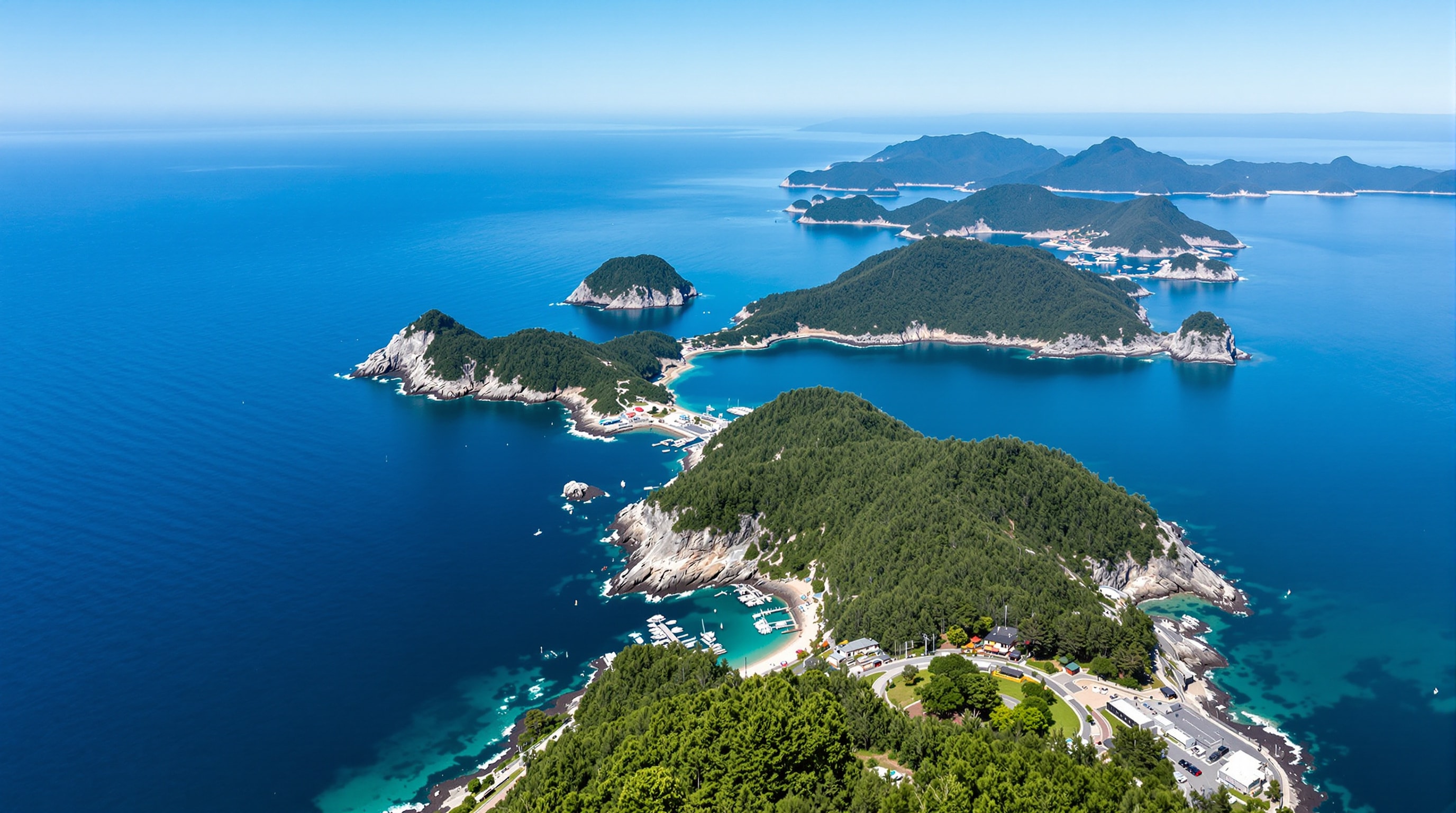
The shape of the eastern shore
Eastern Izu faces Sagami Bay across a coast of alternating headlands and coves, and two neighbouring districts — Itō and Kawana — make the natural base for exploring it. Itō is the region’s principal town, an established hot-spring resort with a long history; Kawana is the quieter pine-covered headland just to its south. Together they offer the peninsula in miniature: baths, boats, seafood, and sea views within a short ride of one another. Background on the area is available in the overview of Itō.
Itō: an old onsen town
Itō has drawn bathers for centuries, and it still feels like a working hot-spring town rather than a resort strip. A river threads through its centre, lined with a mix of old wooden buildings and modern bathhouses; footbaths sit in public spaces, and steam is part of the streetscape. It is also the transport hub for the eastern coast, the point where most visitors change trains or set off south, which makes it a sensible first stop. Our onsen guide goes deeper into the bathing culture that shaped the town.
Kawana: pines, coves, and quiet
South of the bustle, Kawana occupies a green headland reaching into the sea. It is the calmer counterpart to Itō — a place of pine woods, rocky inlets, a small harbour, and wide sea views, historically favoured for its scenery and its golf links along the cliffs. For a traveller it is less a checklist of sights than a mood: an afternoon of walking the headland, watching boats work the coves, and finishing with a bath as the light goes. The nearby heights of Komuroyama give the best overview of the whole shoreline.
Getting on the water and along the coast
The coast rewards effort in both directions — out to sea and along the shore. Sightseeing boats and, in the warmer months, glass-bottomed craft explore the coves and rock formations, and dolphins are sometimes seen offshore; our beaches and coast page covers the marine side. On land, coastal paths link viewpoints and small shrines, and the terrain is gentle enough to enjoy without special preparation. Whatever the season, the eastern shore is built for slow, scenic days rather than a rushed itinerary.
A long history of bathing
Itō’s hot springs are no recent discovery. The town has drawn bathers for many centuries, and by the early modern period its waters were prized enough to be sent to the country’s rulers. That long history shows in the shape of the place — a genuine spa town grown up around its springs rather than a resort built to a plan — and it helps explain the density of bathhouses, the public footbaths, and the easy, unhurried relationship the town has with hot water. To bathe in Itō is to join a habit older than almost anything else a visitor to Izu will do.
Making the area your base
Because Itō and Kawana sit so close together and connect easily to the rest of the peninsula, they make an ideal base for a first Izu trip: bathe and eat in town, ride south for a day on the wilder coast, and return to warm water each evening. Our getting to Izu page explains how to reach the area from Tokyo and move around once you arrive, and the seasons page will help you time the visit to the blossoms, the swimming, or the winter baths.