What the land gives
Izu’s reputation rests on its sea, but the land behind the coast is just as generous. A mild climate, volcanic soil, and abundant clean water — the same volcanic plumbing that feeds the hot springs — combine to grow produce of real quality. For a traveller, the farms are not a separate excursion so much as a flavour that runs through every meal and market stall, described in the wider context of the Japanese mandarin, or mikan.
Mikan: mandarins over the sea
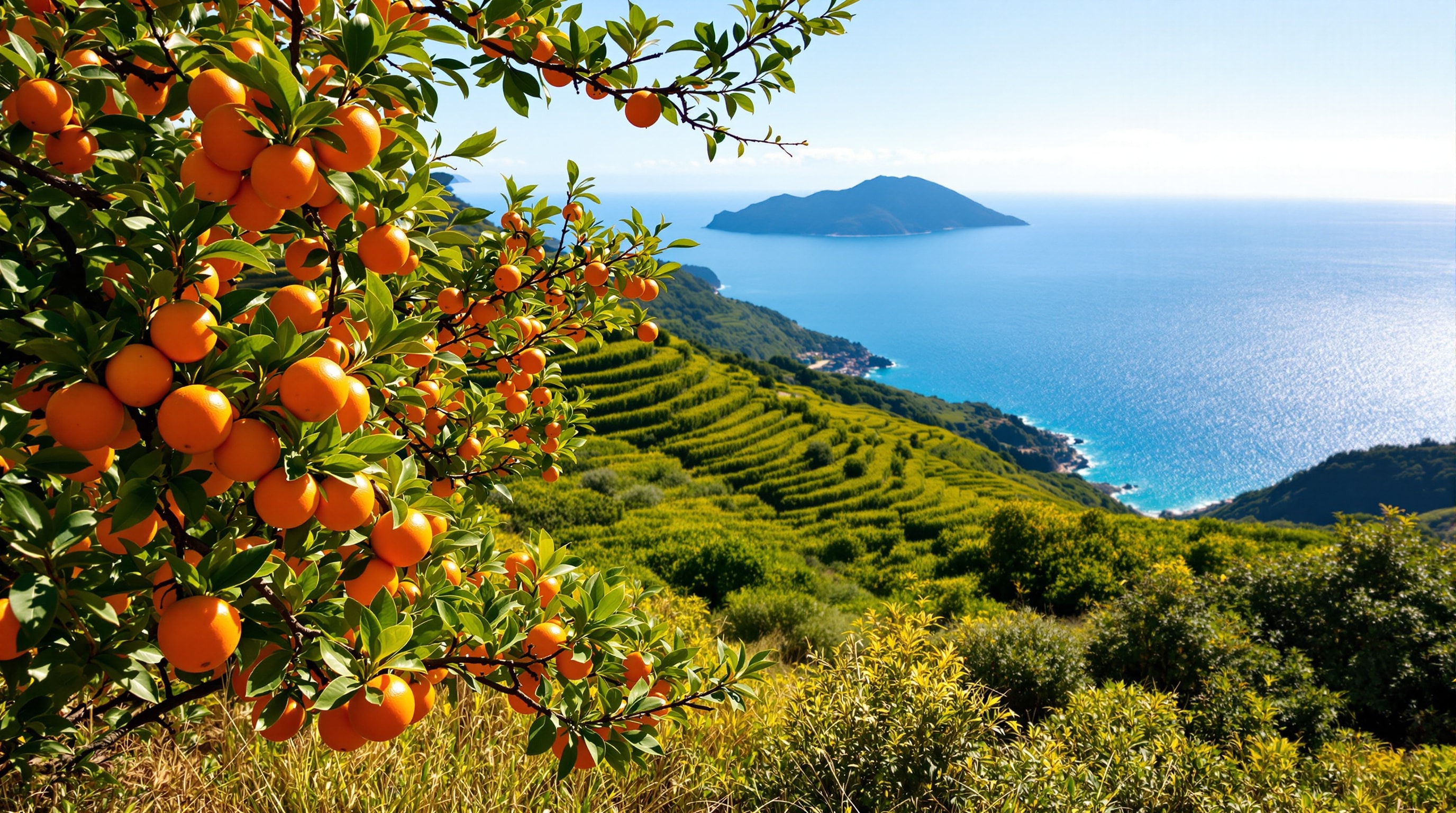
The signature crop is the mikan, the sweet, easy-peeling mandarin that ripens across Izu’s terraced hillsides in autumn and early winter. Grown on slopes that catch the sun and the sea reflection, Izu’s mandarins are prized for their balance of sweetness and acidity, and the sight of orange-laden trees above the blue water is one of the season’s pleasures. Many orchards open for mikan-gari — pick-your-own — letting visitors wander the terraces and eat their fill straight from the branch, a simple joy that pairs perfectly with a coastal autumn day from our seasons guide.
Wasabi from clear streams
Inland, where cold, pure spring water runs down the volcanic hills, Izu grows real wasabi — the true rhizome, cultivated in stepped water beds, that bears little resemblance to the dyed paste served elsewhere. Freshly grated, its heat is bright and fleeting rather than harsh, with a clean sweetness behind it, and it is the natural partner to the region’s sashimi. Tasting genuine fresh-grated wasabi beside a plate of local fish is one of the small revelations of an Izu meal, tying the seafood table back to the hills that frame it.
The rest of the harvest
Beyond mandarins and wasabi, Izu’s stalls and roadside stands turn over with the seasons: other citrus and stone fruit, mountain vegetables, shiitake and other mushrooms, and small-batch preserves, pickles, and sweets made from all of the above. Local markets and farm shops are the best place to meet this produce, and they make excellent, genuinely regional souvenirs — a jar of marmalade or a packet of dried mandarin carries more of Izu home than any keyring.
Sweets, tea, and things to carry home
Izu turns its harvest into keepsakes as much as meals. Mandarins reappear as marmalade, jelly, dried peel, and soft citrus sweets; the coast contributes dried and simmered seafood; and the hills add honey, pickles, and small-batch preserves. Green tea is grown on the volcanic slopes of the wider Shizuoka region — one of Japan’s great tea prefectures — and a packet of local leaf travels well. The best hunting grounds are roadside farm stands and the markets attached to fishing harbours, where prices are fair and the person behind the table often grew or caught what they are selling. A jar or a packet from one of these makes a souvenir with a genuine sense of place.
Tasting the region whole
The reward of paying attention to Izu’s produce is that it joins the peninsula’s parts into one experience. The volcano heats the bath, waters the wasabi, and warms the mandarin slope; the same coast that lands the fish frames the orchard. Eat and shop locally and seasonally, and a trip to Izu stops being a list of separate attractions and becomes a single place, tasted from the sea to the hilltop.