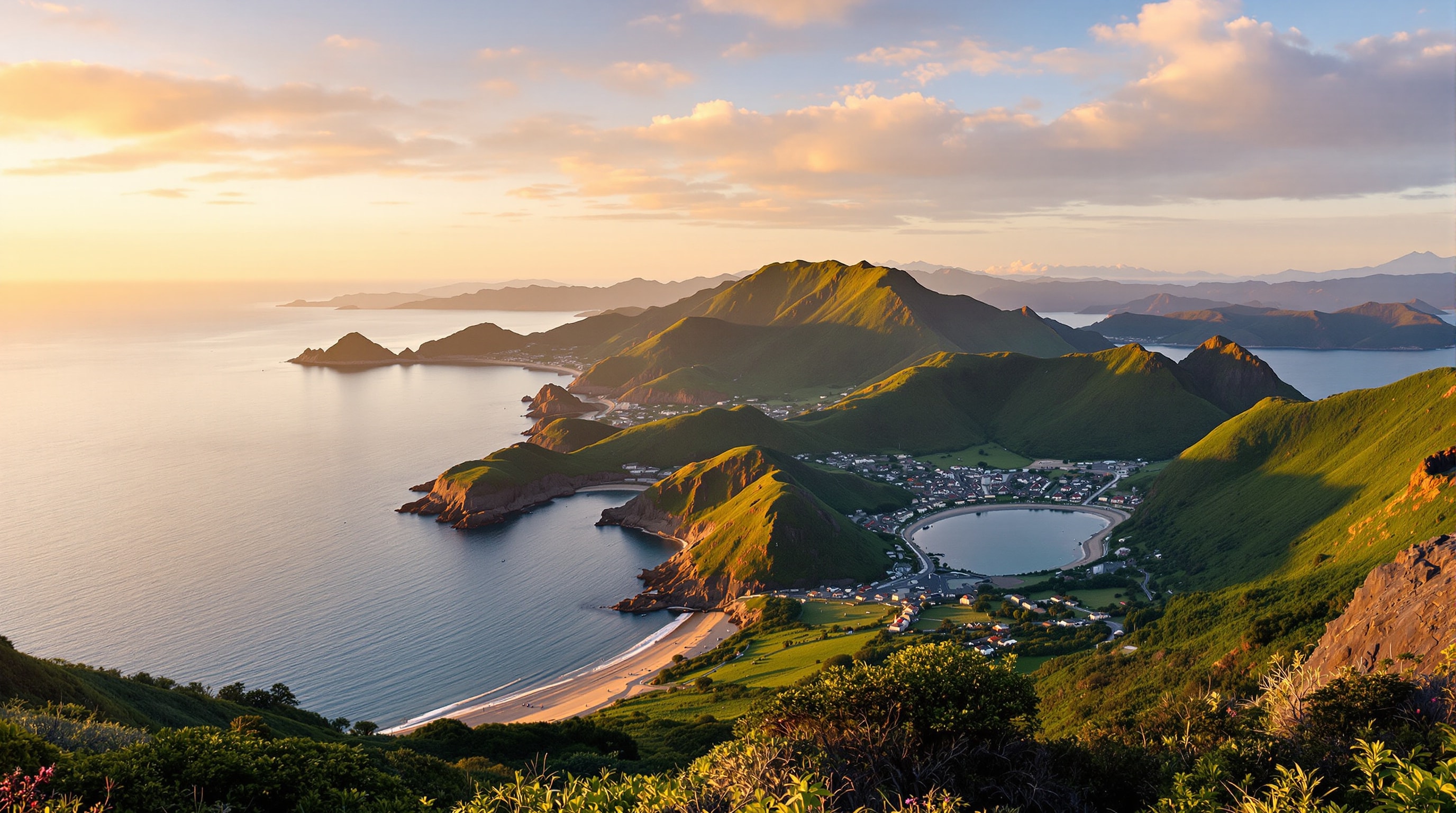
Where the mountains meet a warm sea
The Izu Peninsula hangs off the Pacific coast of Japan, a two-hour reach south of Tokyo where volcanic mountains tumble straight into a blue sea. It is one of the country’s oldest and best-loved onsen (hot-spring) regions, warmed from below by the same restless geology that raised its cliffs and coves. This site is an independent companion to the peninsula’s eastern shore — the districts of Kawana and Itō — written for travellers who want to understand a place before they visit it.
We are not an inn, a booking service, or a tourist board. There is nothing to reserve here and no prices to compare. What you will find instead is unhurried, first-principles writing about the things that make Izu worth the trip: its baths, its kitchens, its hillsides, and its seasons. The Izu Peninsula is recognised as a UNESCO Global Geopark, and its scenery, cuisine, and hot springs all flow from that single volcanic story.
The onsen coast
Bathing is the reason many people first come to Izu, and it remains the heart of a visit. Mineral-rich water surfaces all along the coast, from grand public bathhouses to tiny rotenburo open-air tubs cut into the cliffs above the surf. Our guide to Izu’s hot springs explains what makes the region’s water distinctive, and the companion onsen etiquette guide walks first-time visitors through the simple, unspoken rules of a Japanese bath so that the experience feels like a pleasure rather than a puzzle.
What the water is actually made of
Onsen are classified in Japan by chemistry rather than by temperature alone, and most bathhouses post an analysis of their source: a simple alkaline spring here, a sulphate or sodium-chloride spring there, each with its own feel against the skin and its own faint smell. Learning to read those boards is one of the quieter pleasures of an onsen trip, and it explains why two baths a few streets apart can seem like different substances altogether. The geology behind Izu’s springs — and what research on mineral bathing does and does not establish — is set out in the hot-springs chapter of this guide.
A kitchen fed by the deep sea
Izu’s cooking is a coastal cuisine with an unusual advantage: the sea floor drops away steeply just offshore, so deep-water fish reach the table astonishingly fresh. The peninsula’s signature dish is kinmedai, the golden-eye snapper, most often simmered whole in a glossy sweet-and-savoury broth. Read about it in our kinmedai guide, then explore the wider table — spiny lobster, crab, and the seasonal catch — in our Izu seafood guide.
Four seasons, all of them worth it
Few parts of Japan reward every season the way Izu does. Its mild coastal climate coaxes some of the country’s earliest cherry blossoms into bloom, fills summer with clear-water swimming coves, ripens hillsides of mikan mandarins in autumn, and keeps its baths inviting through a snow-free winter. Our seasons of Izu page lays out what to look for month by month, and the coast guide and Komuroyama page cover the outdoors in more depth.
How to use this companion
You can read the guide in any order. If you are planning a trip, start with getting to Izu for the practical picture of trains and timing, then browse the ryokan tradition page to know what a night in a Japanese inn actually involves. If you are simply curious about the region, wander wherever the headings pull you. Everything here is written to stand on its own, cross-linked so you can follow a thread — from a bath, to a fish, to the hillside where the mandarins grow.