What a ryokan is
A ryokan is a traditional Japanese inn, a form of lodging that dates back centuries and remains one of the most rewarding ways to experience the country. In a region like Izu it is often the reason for the trip rather than merely a place to sleep: the building, the bath, and the meals together make up the experience. The form is described in the overview of the ryokan, but its spirit is best understood a piece at a time.
The room
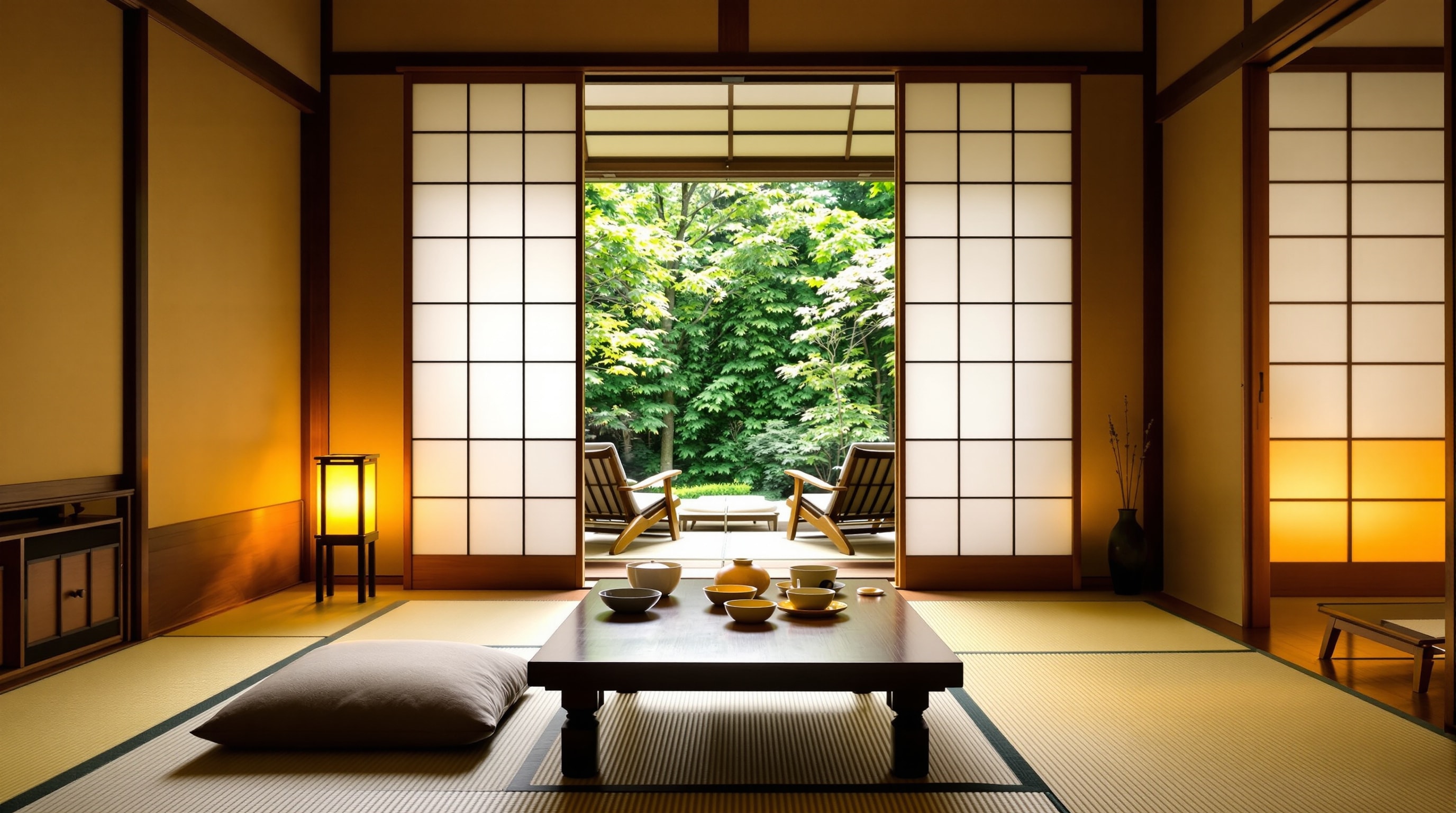
A traditional room is floored with tatami mats and kept deliberately spare: a low table, floor cushions, an alcove that may hold a scroll or a seasonal flower, and sliding shoji screens that soften the light. Bedding is not a fixed piece of furniture but a futon laid out on the tatami in the evening and put away by day, so the same room serves as sitting room and bedroom in turn. You leave your shoes at the entrance and move through the inn in slippers, and often in the light cotton yukata robe provided — a small change of costume that marks the shift into the ryokan’s slower pace.
The bath at the heart of it
In an onsen region the bath is the centre of a ryokan stay. Guests soak before dinner, again before bed, and often once more in the morning, and the rhythm of the day organises itself around the water. Whether the bath is a grand communal hall or a small open-air tub, the etiquette is the same gentle sequence set out on our onsen etiquette page, and the pleasure is the same: to be warm, clean, and unhurried, with nothing to do but soak.
Kappo-ryokan: the inn as a kitchen
Izu is known for a particular variant, the kappo-ryokan — an inn whose kitchen is as much a draw as its baths. Here dinner is a multi-course procession of the local catch and the season’s produce, often served in your room or a private dining space: sashimi, a simmered kinmedai, a grill, perhaps spiny lobster or crab in season, each course timed to the last. Breakfast is a spread of grilled fish, rice, miso soup, and small dishes. For many travellers these meals, described further in our seafood guide, are the highlight of the entire stay.
Yukata, tea, and the small courtesies
Much of a ryokan’s charm lives in its small rituals. On arrival you are usually welcomed with green tea and a sweet; you change into the provided yukata robe and may wear it throughout the inn and even out to the baths; and slippers give way to bare feet or tabi on the tatami. These customs are gentle and forgiving — no one expects a visitor to know them perfectly — but leaning into them is part of the pleasure, a way of stepping briefly out of ordinary life. Wearing the yukata to dinner, padding down to the bath before bed, and waking to a laid-out breakfast are exactly the rhythms that make a ryokan night feel different from any hotel.
The rhythm of a ryokan day
A ryokan keeps earlier hours than a hotel, and knowing the shape of the day in advance removes most of the guesswork. Check-in is usually mid-afternoon and is not a formality to be hurried: tea arrives, the room is explained, and dinner is fixed at a set hour, often between six and seven. That timing is the reason to arrive early rather than late — a kappo kitchen is cooking to the minute, and a guest still on a train at seven is a genuine problem for it. Between arrival and dinner there is time for a first soak; while you eat, the futon appears; and in the morning breakfast is served at a set hour too, with checkout typically around ten. Plan the day around those fixed points and the rest of it looks after itself.
Omotenashi: the art of hospitality
Underlying all of it is omotenashi, the Japanese ideal of wholehearted, anticipatory hospitality — the quiet care that lays out your futon while you bathe, remembers your pace at dinner, and asks for no thanks. It is not servility but attentiveness, and it is the quality that turns a comfortable night into a memorable one. Experiencing it first-hand is the best argument for choosing a ryokan over a conventional hotel, and it is a large part of why a night on the Izu coast lingers in the memory. When you are ready to plan, our getting to Izu page covers the journey.